
How to Choose a 3PL Service Provider for Your Business in India
September 23, 2026
How to Choose a 3PL Service Provider for Your Business in India
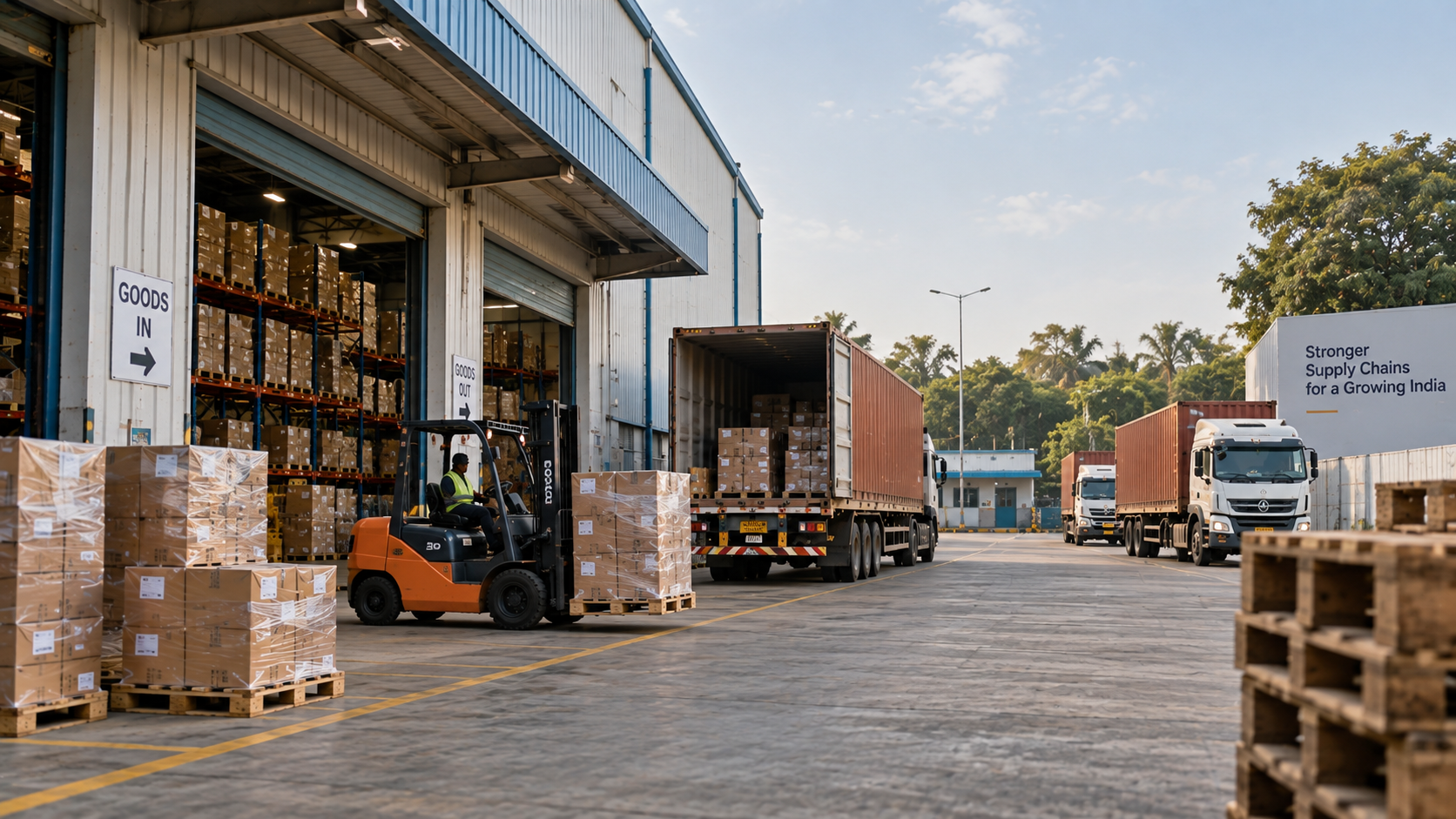
The wrong 3PL rarely looks wrong during the sales presentation.
The gaps usually show up later. Inventory volumes rise and the warehouse struggles to keep pace. A new city is added and distribution costs jump. An integration fails during peak season. A dispatch is ready, but transport is delayed and nobody is quite sure who owns the problem.
By then, switching providers is expensive and disruptive.
That is why choosing a 3PL service provider should go beyond comparing warehouse locations, service lists and quotations. The more important question is how the provider will actually run your operation once your inventory, orders, systems and service commitments are inside their network.
For businesses comparing 3PL service providers in India, these are the questions worth answering before a contract is signed.
Before evaluating providers, define what you actually need them to solve.
A serious 3PL conversation should begin with your current and projected:
Without this information, most proposals remain generic.
A good 3PL logistics company should be able to take these inputs and show how they translate into warehouse location, storage model, manpower, transport, technology and service levels.
A large warehouse network sounds impressive, but the number of locations matters less than how those locations fit your demand.
Ask where your inventory would actually be stored.
Would one central warehouse be enough? Would regional inventory improve delivery times? Could additional locations be added later as your business expands?
At CWLS, our network extends across 18+ cities in India, giving businesses the flexibility to evaluate different inventory and distribution models as their requirements grow. Our warehousing services include dedicated, shared and in-plant models, allowing the storage strategy to be shaped around the business rather than forcing every operation into one format.
The point is not to place stock everywhere.
It is to place it where the operating model makes sense.
Not every warehouse should handle every category in exactly the same way.
Automotive components, FMCG inventory, pharmaceuticals, paints and chemicals, retail products and consumer durables all create different storage, handling and fulfilment requirements.
A provider should therefore be able to explain what changes when your product enters its operation.
Ask which similar categories it already manages, what handling protocols apply, how inventory is identified and controlled, and whether any specialised storage or compliance requirements need to be built into the solution.
CWLS works across sectors including automotive, FMCG, FMCD, retail, e-commerce, pharmaceuticals, and paints and chemicals. That industry exposure allows the logistics model to be designed around the product rather than forcing every client into the same warehouse process.
A warehouse can pick and pack an order perfectly and still fail the customer if the vehicle does not arrive on time.
This is where fragmented logistics models often become difficult to manage.
When evaluating a 3PL with transport services, ask how warehousing and transportation connect operationally.
Who owns the SLA once an order is ready for dispatch? How are vehicles allocated? How are routes planned? What happens if a shipment is delayed? Who investigates a failed delivery?
At CWLS, warehousing and transportation are designed to operate as connected parts of the same logistics flow. Our last-mile delivery services use route planning, live tracking and ETA visibility to support the final movement from dispatch to delivery.
Even where external carriers are involved, your 3PL should remain accountable for coordination, visibility and escalation.
The client should not have to chase one warehouse team, one transporter and another service provider to understand what happened to a shipment.
Technology is one of the easiest things to describe in a proposal.
It is also one of the easiest things to overstate.
Instead of asking whether a provider has a WMS or dashboard, ask to see how the system works.
How does an inbound order enter the operation? When is stock updated? How are barcodes or RFID used? Can your systems integrate with the warehouse? How are exceptions flagged? Can you see dispatch status, inventory movements and returns?
CWLS uses WMS integration, barcode and RFID-based tracking, supply-chain analytics and control-tower visibility to help clients understand what is happening across their inventory and distribution flow.
A dashboard only creates value when it helps your team make decisions.
Words such as “fast”, “accurate” and “reliable” are useful in marketing copy.
They are not useful as operating standards.
Before appointing a 3PL service provider, establish which KPIs will be measured and which service levels will become part of the operating agreement.
Depending on the account, these may include:
If something matters to your customer, it should ideally be measurable somewhere in your logistics operation.
A logistics model should not work only during an average month.
Ask what happens when your order volume doubles for a promotion, festive period or product launch.
Can warehouse manpower be increased? Is additional storage available? Can transport capacity expand? Will cut-off times change? How does the provider plan for seasonal peaks?
This is particularly important for businesses in FMCG, retail and e-commerce, where the difference between an average day and a peak day can be significant.
A 3PL should be able to explain how the operation changes before that peak arrives.
The lowest proposal is not always the lowest logistics cost.
Two providers may quote similar storage rates while structuring every other charge differently.
Ask for clarity on:
The useful question is not simply:
What is the monthly cost?
It is:
What event causes each charge to be triggered?
This makes proposals easier to compare and reduces surprises after go-live.
Signing the contract is only the beginning.
Moving an existing logistics operation may involve inventory transfer, SKU mapping, master-data preparation, SOP creation, WMS integration, trial orders, reconciliation and a carefully managed cutover.
Ask who owns that process.
Who prepares the implementation plan? Who signs off inventory? How will historical data move? Will there be a testing period? Who makes the final go-live decision?
A capable 3PL warehouse partner should be able to explain not only how the finished operation will run, but also how your business will get there without unnecessary disruption.
Every logistics operation eventually has exceptions.
An inventory mismatch. A delayed vehicle. Damaged stock. A failed delivery. An unusual return.
The difference between providers is often revealed in what happens next.
Ask who owns the account once operations begin. Understand the escalation matrix. Establish how frequently performance reviews will happen and which KPIs will be discussed.
For businesses where returns form a meaningful part of the supply chain, it is also worth understanding whether the provider has a defined reverse logistics process for returned, damaged, defective or obsolete products.
A genuine logistics partnership should have a clear governance rhythm rather than depending on urgent phone calls whenever something breaks.
The right 3PL should solve today’s logistics problem without creating tomorrow’s constraint.
Your business may enter new cities, add a sales channel, expand its SKU base or require services that were not part of the original scope.
Look for a provider that can support that evolution through capabilities such as shared or dedicated warehousing, transportation, picking and packing, returns management and value-added services such as kitting, packing, barcode printing, labelling and pre-dispatch activities.
Businesses comparing top 3PL companies in India should therefore look beyond who has the biggest network or longest service list.
The more useful question is:
Can this provider adapt its operating model as our business changes?
At CWLS, we do not begin a new 3PL conversation by trying to fit every client into the same solution.
We first look at the product, inventory profile, order flow, current locations, destination mix, expected volumes and service requirements.
From there, we can evaluate the most appropriate combination of warehousing, transportation, fulfilment, technology and value-added services.
Our 3PL logistics services span an 18+ city network and connect warehousing, inventory management, picking and packing, multi-channel fulfilment, transportation, last-mile distribution and returns within a wider operating model.
The objective is not to add more services than the client needs.
It is to connect the right ones into a logistics model that can be measured, managed and scaled.
Before approaching a provider, prepare the information that allows them to design something meaningful.
At minimum, share your:
A serious 3PL service provider should then be able to show how those requirements translate into an operating model, rather than simply responding with a standard rate card.
That is ultimately how businesses should choose between 3PL service providers in India.
Not by asking who promises the most.
By asking who can explain, in operational terms, exactly how your logistics will work once the contract begins.